

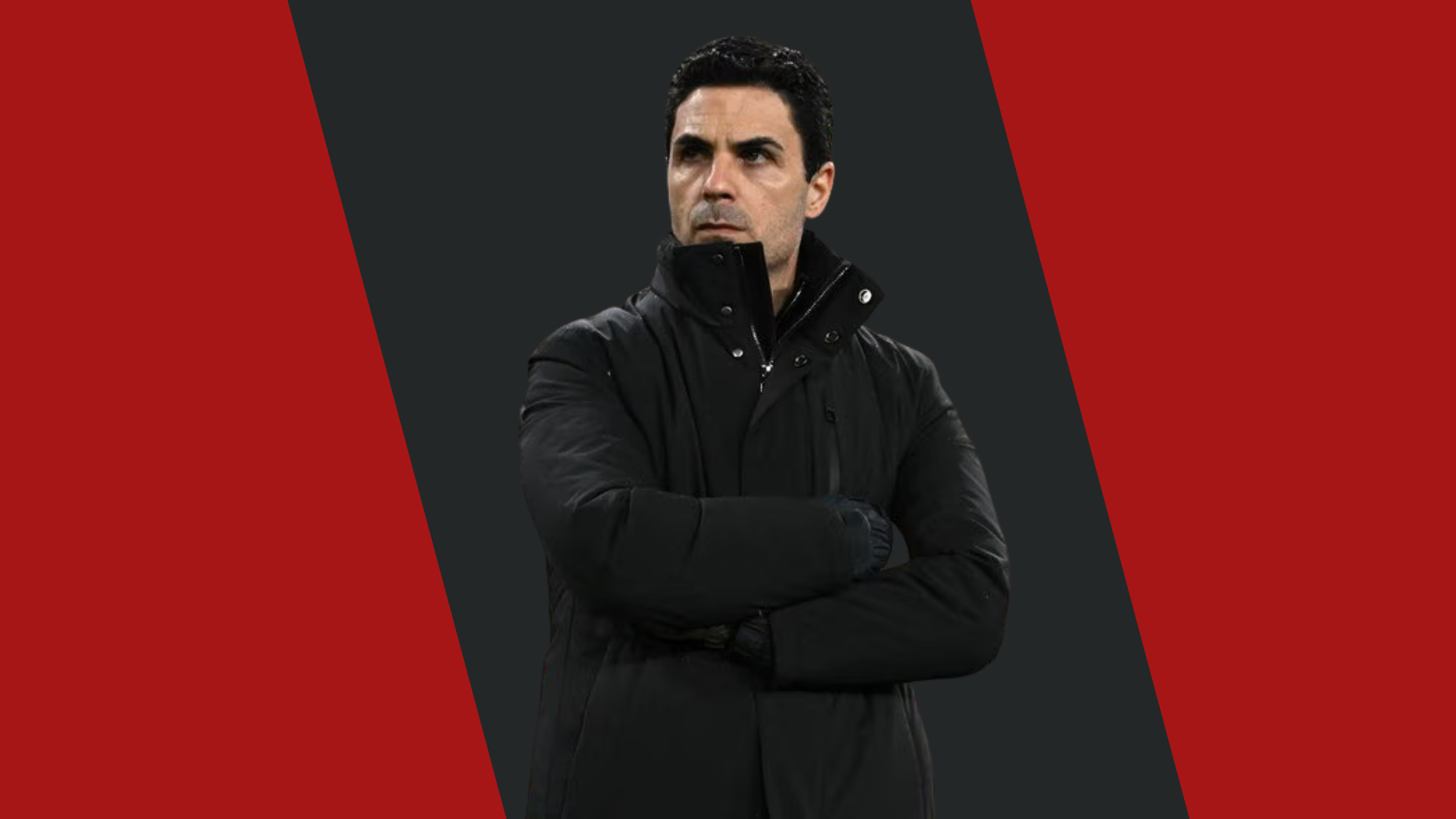
Sorry for the excessive Arsenalposting recently. I try not to fixate on my club in this newsletter, but these are trying times in North London. Mikel Arteta’s team is seemingly on the edge of collapse, as a commanding lead in the title race has evaporated following a string of diabolical results. The 2-2 capitulation at Wolverhampton Wanderers in midweek was just the latest. They’ve taken 10 points from the last 21 available and dropped points to Brentford, Manchester United, Nottingham Forest, and Liverpool. From that group, only United were showing any sort of form at the time, though Brentford are enjoying a fine season overall.
The Wolves result in particular was an emotional disaster. It destroyed Arsenal fans’ faith in the team and in Arteta. They threw away a 2-0 advantage with a cataclysmic second half performance that—if they fail to win the league this season—will go down as the match that lit a genuine self-immolation. Manchester City, a fairly pedestrian side so far in 2025/26, surely smell blood in the water. If Arsenal fail to win the Premier League or the Champions League this season, they will not just be an English punchline. The club will be the laughingstock of Europe.
It’s the kind of narrative that Mikel Arteta cannot possibly recover from as manager. He must prevent it, or it could cost him his job. I say that as someone who began this season with the belief that the ruling Kroenke family would never sanction a dismissal unless he failed to finish in the Champions League places. But in the circumstances that have developed, failure would be such a damning indictment of Arteta’s ability to get his team to the finish line—to maintain their composure and play their game and score the goals to take the title.
Arteta’s peril is compounded by the fact that his Arsenal team don’t play Arsenal football, at least enough of the time. I’ve defended the team this season from Instagram meme page “haramball” hating, and I think they play flowing stuff at times. They face incredibly low blocks in the Premier League, which makes most matches a slog for which the opposition (who’s clogging things up and damaging the contest) is never blamed. But Arteta’s team also aren’t loose enough to let it flow, at least too often, and the danger they create in the open field on the counterattack feels way down this season.
When Arsenal hit the really bad times late in Arsène Wenger’s reign, we supporters could at least comfort ourselves with the moral victory that we played some lovely stuff. Maybe the team was soft and lacked the spine to win titles—for some reason Wenger refused to make the move any kid with FIFA Manager Mode would and sign a defensive midfielder—but at least they put the ball on the floor and engaged in some thrilling pass-and-move possession play.
They’d get smash-and-grabbed all the time when the pretty play came to nought, however, and Arsenal fans got behind Arteta in part because he showed his teams would be defensively solid, physically imposing, and street smart in the ways Wenger’s teams never were after Patrick Vieira left the club. That’s what’s kept Arsenal fans on board even when the football is on Benzodiazepines: Mourinho-style results-getting.
But the faithful truly fell in love with this team in the first half of 2022/23, when the young group exploded onto the scene playing dashing stuff. Bukayo Saka and Gabriel Martinelli and Martin Ødegaard went to a new level, Gabriel Jesus was spinning and battling and rattling off the combination play, Granit Xhaka was reborn as an attacking number eight in midfield, and all that played out in front of a stout and athletic defensive corps.
When they fell away that time, it was explicable: They were young. They’d get more chances. And they did, the following year, when only a superhuman showing from City was enough to better Arsenal’s closing run to the season, where they won 16 of their last 18 games. Then 2024/25 was an injury- and suspension-riddled disaster only redeemed with a Champions League semifinal run powered primarily by the team’s brilliant defensive schemes and game management. And now 2025/26 was supposed to be The Year again.

If it isn’t, that spells trouble for the manager. He’s been given all the tools, backed in the transfer market and with regular salary hikes for his key men and in disputes with problem players or the football authorities. Arsenal have, on talent, the deepest squad in Europe, with two or three or more players at every position capable of producing at a high level. Failure will be failure to cope with the mental demands of the game at its apex, and Arteta will take the blame.
The only explanation worse than that it’s the manager’s fault is what many Arsenal fans fear most: That the club is cursed, that there’s something in the water at London Colney that makes it impossible for the club to fill its cabinet with major trophies. Maybe it’s the new stadium, where the club have yet to win anything outside the FA Cup, or maybe there’s something seeping into the bloodstream. In the end, are they just…Spursy?
Now Arsenal will have to contend with the small matter of a journey to their most vicious rivals. It’s a short trip down the Seven Sisters Road to Tottenham, who would love nothing better than to give their greatest enemies a little push into madness. It might even make up for the ignominy of seeing Spurs sinking towards a relegation scrap. Can Arteta and his team keep their fans—and themselves—out of the loony bin? We’ll find out on Sunday.