

Arsenal Derangement Syndrome
It's a problem.

After Arsenal won a Champions League semifinal on Tuesday night, securing their place on European football’s biggest stage for the first time in 20 years, ESPN FC’s studio crew mused about physically attacking the manager, Mikel Arteta. Presenter Dan Thomas later apologized, but these folks were not afraid to communicate on a reputable network’s airwaves that they openly hate the head coach of a major club,1 particularly if it might generate a juicy clip for short-form vertical video platforms.
Hatred of the Arsenal has become a major industry, a revenue-chasing strategy for football businesses of all sizes, because Arsenal fans always react (and serve up engagement) and because far too many people have no football personality beyond hating Arsenal. They seem to have no aspirations for their own clubs at this point. Only the suffering of others—A BOTTLING!—might help these people derive some joy from the world’s game.
It’s Arsenal’s playing style, say some. It’s the fans online, they’re so annoying, say others. Even if Arsenal fans are, on average, more annoying than any other fanbase, surely the campaign of endless abuse from Instagram pages, YouTube channels, and sporting news networks that’s now crossing over into outright fantasies of violence against club personnel ought to suggest we’ve lost the plot.
But perhaps not. Perhaps Arsenal’s manager leaving his technical area in the business minutes of a Champions League semifinal is a corporal offense. Maybe his occasionally weird antics on the sideline or at a press conference are actually felonious crimes, like scoring goals from corners or playing with physicality. Of course, for the nearly 20 years that I’ve been a fan of the Arsenal,2 we’ve mostly been ridiculed for being soft.
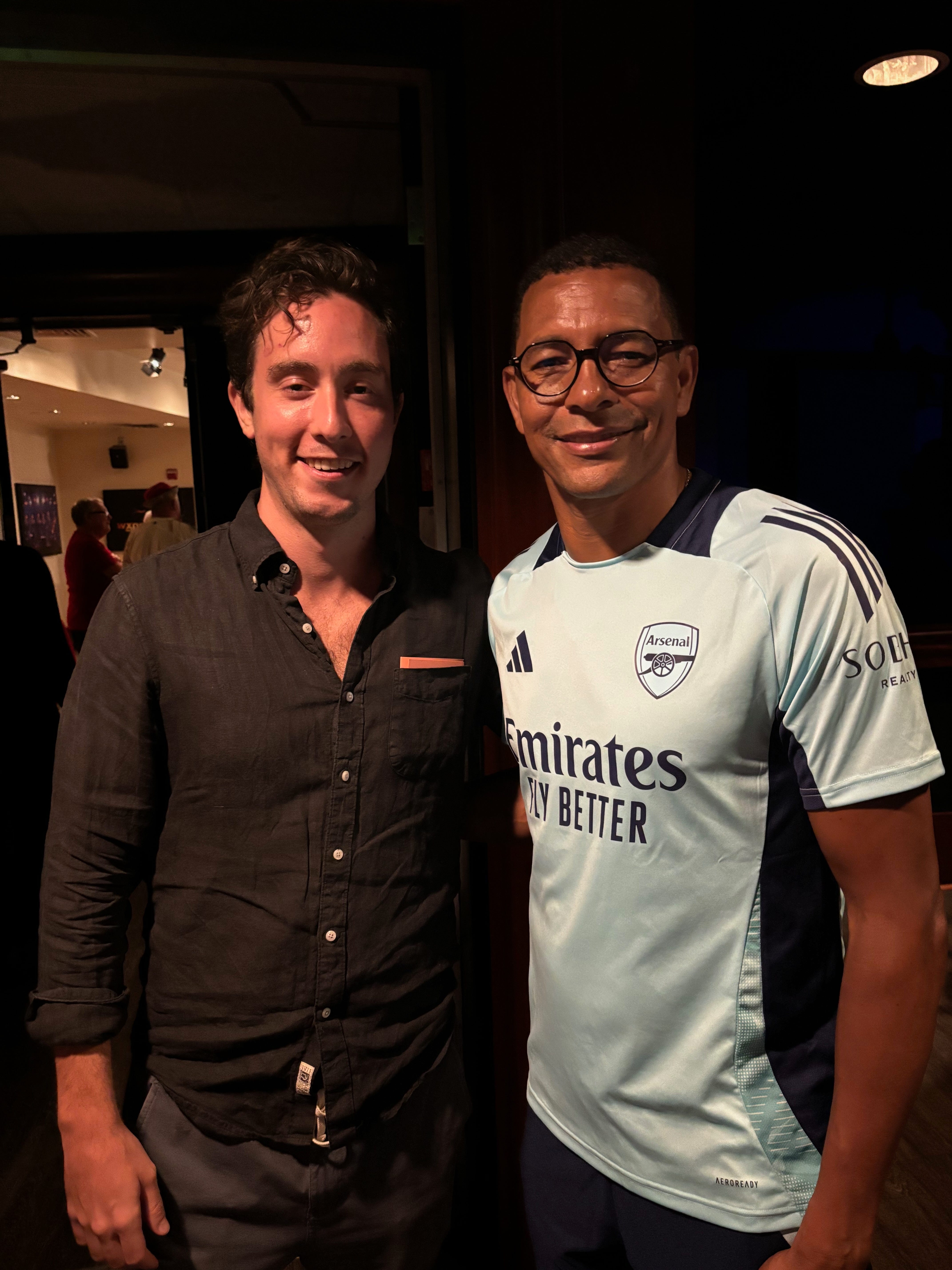
“Men against boys,” was always the arrow shot by Manchester United’s Patrice Evra and every pundit from here to Timbuktu after we’d lose a big match despite playing some lovely stuff. There was something to it. I once met Gilberto Silva at an Arseblog event in Philadelphia and probably unnerved him with my enthusiasm as I told him we’d never been the same since he and Patrick Vieira left.
After Vieira successor Abou Diaby’s body failed him, we did not have a truly dynamic box-to-box presence to compete in the middle of the park for years. We had phenomenal technicians, but we got dominated by the Michael Essiens (and by the Frank Lampards and Didier Drogbas) as Chelsea took our trophies and our place in the English pyramid for a decade and a half. United had their fun, too, before both of them (hilariously) went to shit. This week Arsenal won a Champions League semifinal, but 17 years ago, they lost one when (among other horrors) Cristiano Ronaldo scored a free kick from 40 yards. He threw on the AIG Blues and put a cruise missile past Manuel Almunia, one of so many hapless goalkeepers and defensive midfielders and center backs that Wenger hired across his latter years. Then there was Unai Emery and the nightmare in Baku.
Then, in 2022/23, we took our place in English football back. Arteta had won the FA Cup in his opening season, but three years into his managerial career he was leading his team to a legitimate title challenge. They played some scintillating stuff in the first part of that season, before the World Cup break came and cost them Gabriel Jesus for the foreseeable. He was the fulcrum of some fabulous pass-and-go interplay featuring Martin Ødegaard, Bukayo Saka, Gabriel Martinelli, and Granit Xhaka at their very best in an Arsenal shirt. The football was flowing, exciting, and still physical.3 They dominated all sides of the game. They did not shirk any challenges, they controlled the field by imposing themselves with both mind and body. They held on well after the Jesus injury, but then William Saliba and Takehiro Tomiyasu got injured in the same match against Sporting Lisbon in the Europa League Round of 16. The defense fell apart and so did the Premier League title charge. City won it.
Then there was 2023/24, when Arsenal faltered only briefly in the middle section of the season before rolling to 16 wins in 18 Premier League games to end the campaign. City beat them to the title with 91 points to their 89, but it was a fine effort and Arsenal popped in plenty of goals when they were in good patches of form.
Then came 2024/25 and the Dark Ages. Even if you’re a neutral, you have to acknowledge the absurdity of sending off Declan Rice—and Leandro Trossard against Manchester City the following month—for “delaying the restart,” a crime that’s never seen similar punishment since. Yet Michael Oliver showed Trossard a second yellow for kicking the ball away less than one second after his whistle went in a game between Arsenal and their chief title rivals of the previous two years. They’d just scored to go up 2-1 away at the Etihad. The team never got going in the league that season due to poor form, bad injuries, and yes, refereeing atrocities, though they did cruise into a Champions League semifinal after dismantling Real Madrid.
Still, I believe last season is where the true out-and-out hatred began for many fans. Arteta got testy—though anybody who says his “desgracia” rant after Newcastle away was out-of-order didn’t watch the match—and Arsenal fans reacted to the abuse in a major way that only fueled the growth of this content industry. Suddenly, Arteta was football’s #1 pantomime villain. Suddenly, the club long mocked for its inability to compete on the physical side and grind out results was derided for doing those very things.

Criticizing Arsenal means views, comments, shares, engagement. No wonder Man United alumni with a podcast are hosting Scott Carson to suddenly and mournfully recount the neglect he suffered at the hands of then-assistant coach Mikel Arteta back in 2019, when Carson was the third-string goalkeeper at Manchester City. I refuse to believe anyone is listening to Paul Scholes’s podcast, but the clips be doing numbers.
Who cares what kind of culture you’re contributing to when you can strike lucrative advertising and partnership deals, not to mention harvest the intoxicating feelings of power and influence? The fine play we’ve seen from Arteta’s Arsenal for much of the last four years, Rice’s two virtuoso free kicks to take down UCL juggernauts Real Madrid, the last-gasp winners from academy kids, all those title races that Arsenal have contested on the biggest stage for the public’s thrill and enjoyment: Forget all that dross. Fuck ‘em!4
It’s at the point where the players are criticized for celebrating too boisterously after winning a Champions League semifinal. So were we fans, who poured out our genuine emotion on Tuesday night after that two-decade roller coaster of massive promise and wrenching despair. I’m not ashamed to say that I wept on my couch at home nearly 3,500 miles away. But to many in the football world, it seems, we’re less human than we are cartoon caricatures to be pilloried no matter the cost.
Anyway, Arsenal are into their first Champions League final since Thierry Henry led the O2 assassins in golden yellow kits past Real Madrid, Juventus, and very nearly Barcelona in the final. Keeper Jens Lehmann’s sending-off was vital in their heartbreaking 2-1 defeat to Frank Rijkaard’s budding superteam.5 Andrés Iniesta made it off the bench but Xavi did not as an offside Samuel Eto’o canceled out Sol Campbell’s headed opener for 10-man Arsenal before Juliano Belletti snatched the winner. It was a scarring night for Arsenal in Paris, years before PSG were anything to write home about.
Football’s chattering classes now say the Londoners will get battered by the free-scoring Parisians in Budapest at the end of this month, but the aforementioned Chelsea won plenty of trophies they “didn’t deserve” under José Mourinho.6 All those silver cups live in the club museum in West London now, while their neighbors to the northeast have played 22 seasons with only FA Cups to show for it. Now Arsenal are four games from a legendary double, and all some people can think to say is that they hate the Arsenal. Have at it. My hatred of Mourinho—and, for that matter, Sir Alex Ferguson—never stopped them scooping up all the medals.
ESPN panelist Craig Burley did grant that Diego Simeone, Arteta’s opposite number, is similarly evil and depraved on the sideline.
I cleverly joined up a few months after the last time we did this, feeling assured that with an Invincible English title two years before and a Champions League final soon after, we’d be competing for major trophies for years to come.
And yes, Thomas Partey was part of it, even if he’d ultimately tarnish the club in a serious way.
Fuck ‘em to the point it’s worth de facto backing two clubs, in Man City and PSG, that are political projects orchestrated by petrochemical monarchies to project power and cultural influence in Europe and the wider world through huge expenditures from their sovereign wealth funds. Never mind what it’s like to live in those countries when you’re not a member of the royal family . . .
Ronaldinho, then at the peak of his powers, was kept in check by an Arsenal defense that until then had conceded zero goals in the knockout rounds.
The Portuguese schemer also famously never left his technical area, always played flee-flowing football, and showed gracious respect for his opponents.